Algarve Travel Tips: Things to Know Before You Go
Things to know before visiting the Algarve: entry rules, money, language, safety, wildfire season, beaches, driving and tolls, tipping and what to pack.
December 28, 2022 • 6 min read
Algarve Travel Tips: Things to Know Before You Go
The Algarve is easy to visit. Portugal uses the euro, cards are accepted almost everywhere, and English is widely spoken in tourist areas. Portugal ranked 7th in the 2025 Global Peace Index. The A22 motorway along the coast has had no tolls since 2025, the emergency number is 112, and in summer you should follow wildfire warnings when you head inland. Pack sunscreen, a light layer for the evenings and water shoes for rocky coves.
Below is the practical information to check before you travel, from entry rules and money to beach safety, driving and tipping.
Algarve Essentials at a Glance
| What to know | |
|---|---|
| Currency | Euro (EUR) |
| Language | Portuguese; English widely spoken in tourist areas |
| Time zone | Western European Time, the same as London |
| Emergency number | 112 for police, ambulance and fire |
| Plugs | Types C and F, 230 V |
| Main airport | Faro |
| Motorway tolls | None on the A22 since 2025; the A2 from Lisbon is tolled |
Entry Requirements
Portugal is in the EU and the Schengen Area. The EU's Entry/Exit System (EES) has been fully operational at external borders since April 2026, so non-EU visitors register their fingerprints and a photo on their first entry instead of having their passport stamped. The EU's ETIAS travel authorisation for visa-exempt visitors, including travellers from the US, Canada and the UK, is due to start after EES. Requirements change, so check the official EU and Portuguese government websites for your nationality before you book.

Money and Payments
- Cards: Visa and Mastercard are accepted in most hotels, restaurants and shops. Some small cafés, market stalls and beach kiosks prefer cash.
- Cash machines: look for Multibanco ATMs, the national network, usually attached to a bank. If the screen offers to charge you in your home currency, choose euros, since the conversion rate offered is usually worse.
- Tipping: not compulsory. Rounding up or leaving around 5 to 10 percent for good service in restaurants is common.
- Couvert: bread, olives and starters brought to the table are charged if you eat them. Send them back if you do not want them.
Language
Portuguese is the official language. In the resorts, hotels and restaurants of the Algarve, English is widely spoken, and many staff also speak Spanish, French or German. A few words go a long way:
- Olá: hello
- Obrigado / obrigada: thank you (said by a man / a woman)
- Por favor: please
- A conta, por favor: the bill, please
- Desculpe: excuse me, sorry
Is the Algarve Safe?
Yes. Portugal ranked 7th out of 163 countries in the 2025 Global Peace Index, and the Algarve is a low-risk destination for visitors. The usual precautions apply: watch your bag in crowded places and on busy beaches, do not leave valuables visible in a parked car, and use licensed taxis or ride-hailing apps at night.

Wildfires in the Algarve
Like much of southern Europe, the Algarve has a wildfire season, mainly in the hot, dry months of summer and early autumn. Fires usually affect the inland hills, such as the Serra de Monchique and the countryside north of the coast, rather than the beach resorts.
- Check the fire risk: IPMA, Portugal's weather institute, publishes daily fire-risk levels by municipality.
- Follow local instructions: on days of very high or maximum risk, authorities can restrict access to forest areas and ban barbecues and any use of fire outdoors.
- Never light fires or throw cigarettes in rural areas, and avoid parking on dry grass.
- If you see a fire, move away from it and call 112.
- Hiking in summer: plan walks in the hills for spring or autumn, and check the risk level before you set out.
Beach Safety
- Flags: green means swimming is allowed, yellow means you can paddle but not swim, and red means no swimming.
- Lifeguards: watched beaches have lifeguards during the official bathing season, which in most of the Algarve covers the summer months. Outside it, many beaches are unwatched.
- Currents: the Atlantic is stronger than the Mediterranean, especially on the west coast. Stay within the flagged areas and never swim near rocks in a swell.
- Cliffs: keep back from the edge on clifftop paths and do not sit directly below cliffs, where rock falls can happen.
- Water shoes: useful for the rocky coves between Lagos and Albufeira and for the rock pools at low tide.
- Sun: the sun is strong from spring to autumn. Use high-factor sunscreen and avoid the midday hours on the beach in summer.
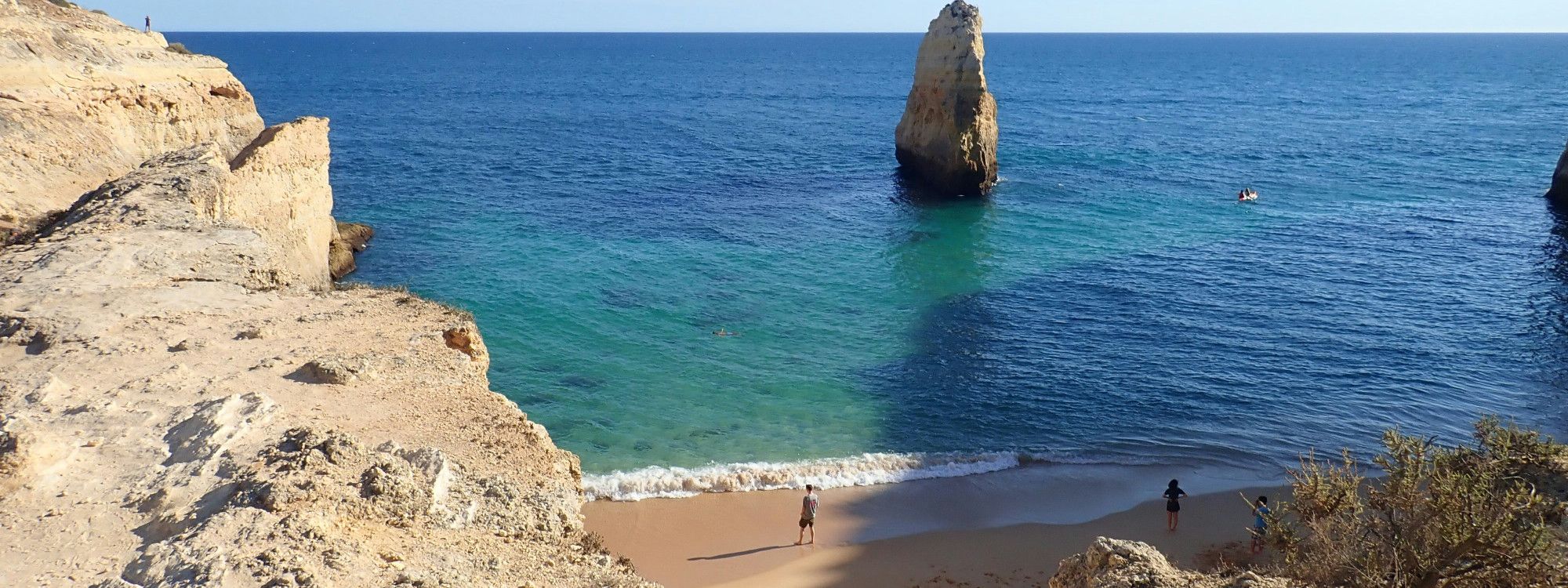
Beaches and coast
Getting Around
- Car: the easiest way to explore. The A22 motorway runs the length of the Algarve and has had no tolls since 1 January 2025. The A2 from Lisbon is tolled, with booths that take cash and cards. Drive on the right.
- Train: the regional Algarve line links Lagos, Portimão, Albufeira, Faro, Olhão, Tavira and Vila Real de Santo António. Some stations are a few kilometres from the town centres.
- Bus: Vamus buses link the main towns and villages.
- Taxis and ride-hailing: available in the main towns, with Uber and Bolt in the larger resorts.
Getting around
Health and Practical Bits
- Health insurance: EU travellers should carry their European Health Insurance Card. Everyone else should have travel insurance that covers medical care.
- Pharmacies: marked with a green cross, with a rota of pharmacies open at night in each town.
- Health helpline: SNS 24 gives medical advice by phone. For emergencies, call 112.
- Opening hours: many shops close on Sunday in smaller towns, and some traditional restaurants close in the afternoon between lunch and dinner.
- Smoking: not allowed inside restaurants and bars.

What to Pack
- Sunscreen, sunglasses and a hat
- Water shoes for rocky beaches
- A light jacket or sweater for evenings, even in summer, and a warmer layer from November to March
- Comfortable shoes for cobbled old towns and clifftop paths
- A plug adapter for types C and F sockets, if you are travelling from outside continental Europe
Plan your Algarve trip
ALGARVE ESSENTIAL PACKAGE
Flights, hotel and airport transfers in the Algarve, so the practical side of the trip is already arranged when you land.
See the Algarve package →Plan it your way
Custom Your Trip
Tell our local travel advisors which towns, dates and experiences you want and we build the Algarve trip around you, transfers and tours included.
Start your custom trip →Limited time
Portugal Packages On Sale
Flights, hotels and rental car bundled at reduced prices. See every package currently on sale and book while it lasts.
Book now →