Dom Luís I Bridge in Porto: Guide & Tips
The Dom Luís I Bridge in Porto: its history and the Eiffel link, height and length, how to walk both decks, the best photo spots and visiting tips.
March 30, 2023 • 7 min read
Dom Luís I Bridge in Porto: Guide & Tips
Dom Luís I Bridge: Quick Facts
History of the Dom Luís I Bridge
Before the current bridge, Porto and Gaia were linked by the Ponte Pênsil, a suspension bridge. As the city grew, it needed a crossing that served both the riverside and the upper town.
- 1879. Gustave Eiffel proposed a bridge with a single high deck. It was rejected because the city wanted two levels.
- 1880. A design competition opened in November, with entries from across Europe.
- 1881. The Belgian Société de Willebroek won with a design by Théophile Seyrig, and construction began in November, next to the towers of the old suspension bridge.
- 1886. The arch and upper deck were completed on October 30 and opened the next day, with a toll for those crossing.
- 1887. The lower deck opened, completing the bridge.
- 1944. The toll was abolished, and the bridge became free to cross.
- 1908 to 1993. Trams used the upper deck from 1908 to 1959, followed by trolleybuses until 1993.
- 2003 to 2005. The upper deck closed to cars in 2003 and was converted for the metro, which has crossed it since 2005.
- 2021 to 2023. The lower deck was renovated and reopened in April 2023 to pedestrians, cyclists, public transport and taxis only.
The old suspension bridge was dismantled once the new one opened, but its granite pillars still stand on the Porto bank, by the Ribeira.

Is It the Eiffel Bridge?
Not exactly. Gustave Eiffel's own proposal for this crossing was rejected. The bridge was designed by Théophile Seyrig, who had been Eiffel's business partner and had designed the Maria Pia railway bridge, built by Eiffel's company about a kilometer upriver. The two bridges look alike, which is where the confusion comes from.
How to Walk Across the Bridge
Walking the bridge is free and possible at any time of day. Allow 30 to 60 minutes to cross and stop for photos.
The Upper Deck
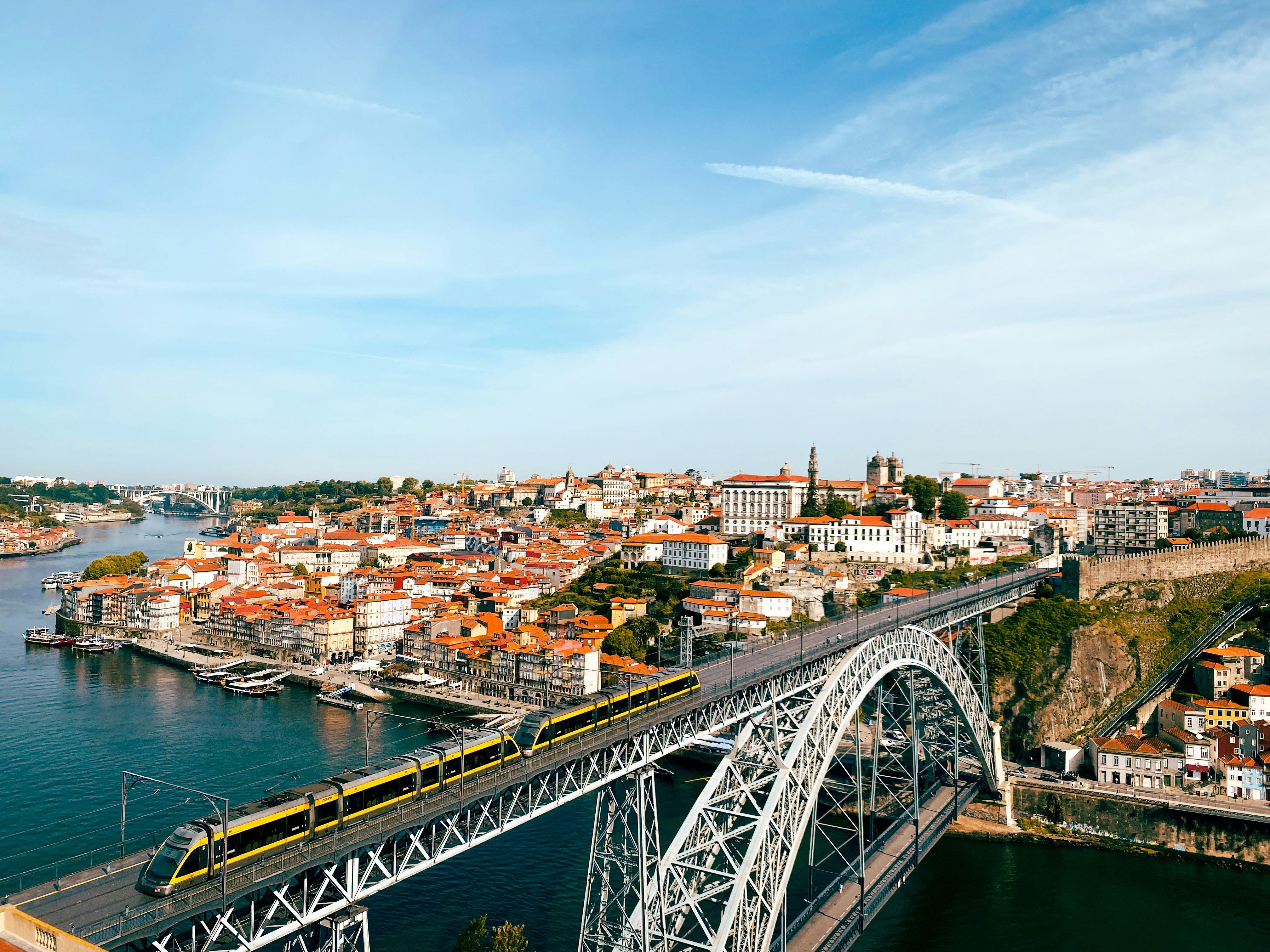
The upper deck is where the views are, over the Ribeira, the Gaia port wine lodges, the cathedral and Clérigos Tower. You share it with metro line D, so stay in the pedestrian lane and step back when a train approaches.
- From Porto: take the stairs from Rua Augusto Rosa, near Batalha, or ride the Funicular dos Guindais up from the riverside.
- From Gaia: the Jardim do Morro metro station gives step-free access to the upper deck.
- Weather: the iron surface is slippery in the rain, and the wind can be strong, so bring a layer.

The Lower Deck
The lower deck runs at river level between the Ribeira and the Gaia quay. The walkways are flat and reachable from the street on both banks, so it is the easiest crossing with a stroller or a wheelchair. It is quieter after dark, so walk with company at night.

A Simple Loop
Start at the Ribeira, climb to the upper deck by the Guindais funicular, cross to Jardim do Morro for the view, ride the Gaia cable car down to the riverside past the port lodges, and walk back to Porto on the lower deck.

Best Photo Spots
For quiet photos, go before 9am. From mid-morning to late afternoon in summer, and in the hour before sunset, the bridge is at its busiest. After dark, the bridge is lit up, and its reflections on the Douro make good night shots.

See the Bridge from the River
Sailing under the Dom Luís I Bridge gives you a view of the arch you cannot get from the banks. A short cruise from the Ribeira passes under it, and the six bridges cruise covers all the bridges on the Douro in Porto: the Luís I, Infante, Maria Pia, São João, Arrábida and Freixo.

How to Get to the Dom Luís I Bridge
- On foot: from São Bento station, it is a downhill walk of 10 to 15 minutes along Avenida Dom Afonso Henriques to the upper deck.
- By metro: line D crosses the upper deck. Get off at Jardim do Morro on the Gaia side, or São Bento on the Porto side.
- By funicular: the Funicular dos Guindais links the riverside near the lower deck with Batalha, close to the upper deck.
- By cable car: the Teleférico de Gaia links the Gaia quay with the upper end of the bridge.

What to See Nearby
- Ribeira. Porto's riverside quarter, at the foot of the bridge, is the best place to start or end your walk.
- Port wine lodges. Across the lower deck, the Gaia quay is lined with cellars that offer tours and tastings.
- Serra do Pilar. The monastery above the Gaia end of the bridge is part of the same UNESCO site and has the classic view of the city.
- Porto Cathedral. A short climb from the upper deck on the Porto side.