Book with an Expert 020 3966 8920
Lisbon Architecture: 15 Famous Buildings

Lisbon Architecture: 15 Famous Buildings

Lisbon architecture from Manueline to modern: Jerónimos, Belém Tower, the Pombaline Baixa, Rossio station, Oriente, the bridges and MAAT.

MP
Mariana Pavão

April 15, 2020 • 8 min read

Top 10 Architectural Monuments in Lisbon, Portugal

by Portugal Getaways Team

Updated November 2026 • 7 min read

✈️ THE SHORT VERSION

Lisbon's architecture tells the city's story in layers. The Manueline style of the Age of Discovery, carved with ropes, shells and armillary spheres, shines at the Jerónimos Monastery and Belém Tower. After the 1755 earthquake, the Baixa was rebuilt on a grid with an early anti-seismic building system. The 20th century added the 25 de Abril Bridge, and Expo '98 and the years after brought Calatrava's Oriente station, Siza's Portugal Pavilion and the riverside MAAT.

This guide covers Lisbon's 15 most famous buildings, organized by period, so you can see how each style grew from the last and where to find them.

Lisbon's Architecture at a Glance

PeriodStyleBuildings to seeWhere
12th to 14th centuriesRomanesque and GothicLisbon Cathedral, Carmo ConventAlfama, Chiado
About 1490 to 1520ManuelineJerónimos Monastery, Belém TowerBelém
After 1755PombalineThe Baixa, Praça do ComércioDowntown
Late 19th centuryRevival and ironRossio station, Santa Justa LiftRossio, Baixa
20th centuryEngineering25 de Abril BridgeAlcântara
1998 onwardContemporaryOriente station, Portugal Pavilion, Champalimaud, MAATParque das Nações, Belém

Medieval Lisbon

1. Lisbon Cathedral (Sé)

Begun in 1147, soon after the city was taken from the Moors, the Sé is the oldest church in Lisbon. Its fortress-like front with two towers is Romanesque, while the cloister is Gothic and the main chapel was rebuilt in the 18th century after the 1755 earthquake destroyed the original. It is a good place to see how Lisbon's buildings were repaired and added to over the centuries.


Street-level view of Lisbon Cathedral, showing its twin Romanesque towers, rose window and historic stone façade in the Alfama district.
Lisbon Cathedral, Lisbon, Portugal

2. Carmo Convent

The convent was founded in 1389, and its Gothic church lost its roof in the 1755 earthquake. It was never rebuilt, so its pointed arches now stand open to the sky above Chiado. The ruins house the Carmo Archaeological Museum.
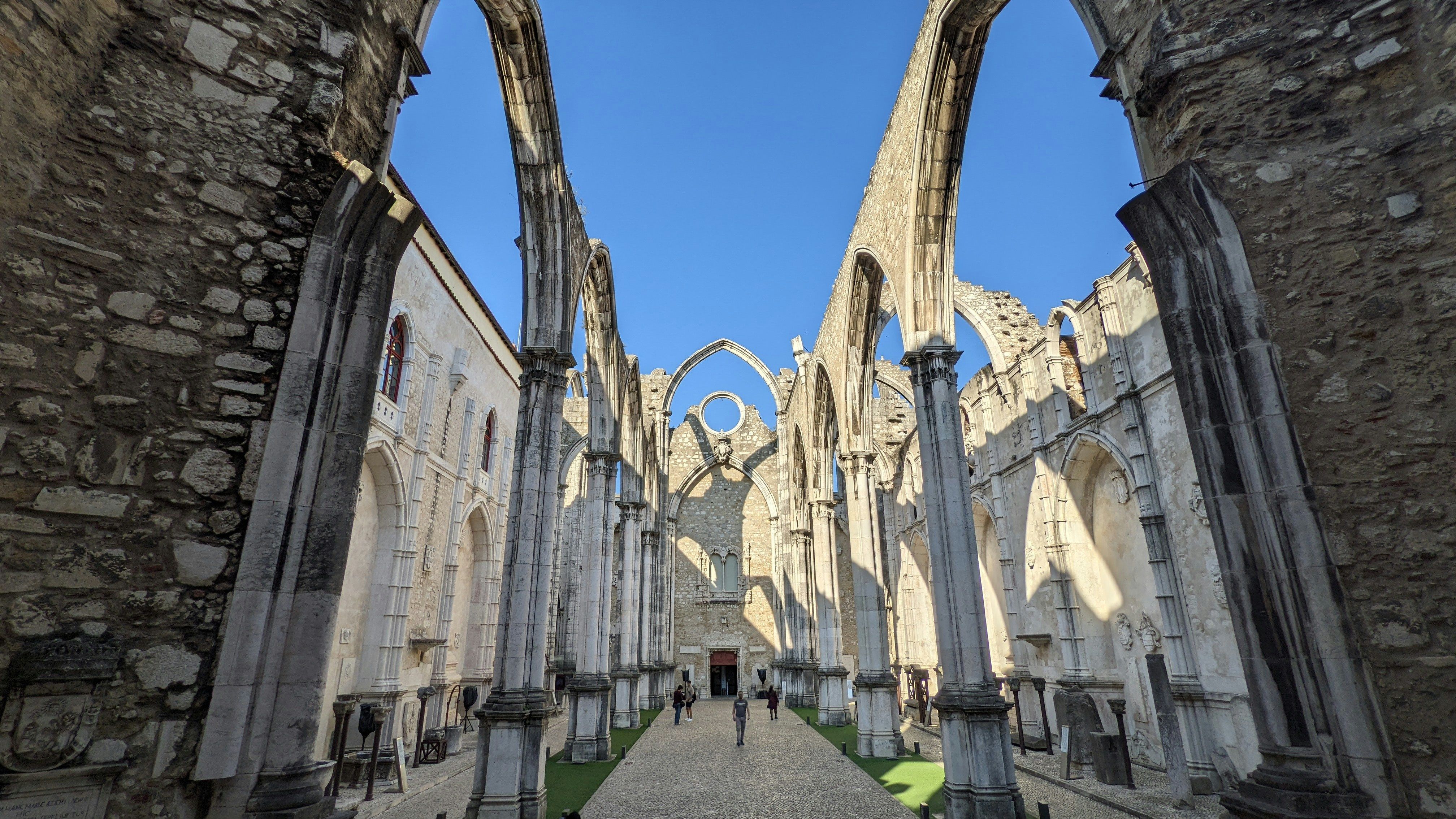
 

Interior view of the roofless Carmo Convent in Lisbon, with tall Gothic arches and stone columns framing the open blue sky.
Gothic Ruins of Carmo Convent, Lisbon, Portugal

Manueline: The Age of Discovery

The Manueline style developed during the reign of King Manuel I (1495 to 1521), when Portuguese ships were reaching Africa, India and Brazil. It decorates late Gothic buildings with maritime motifs: twisted ropes, anchors, shells, seaweed and the armillary sphere, the navigational instrument that was the king's emblem.

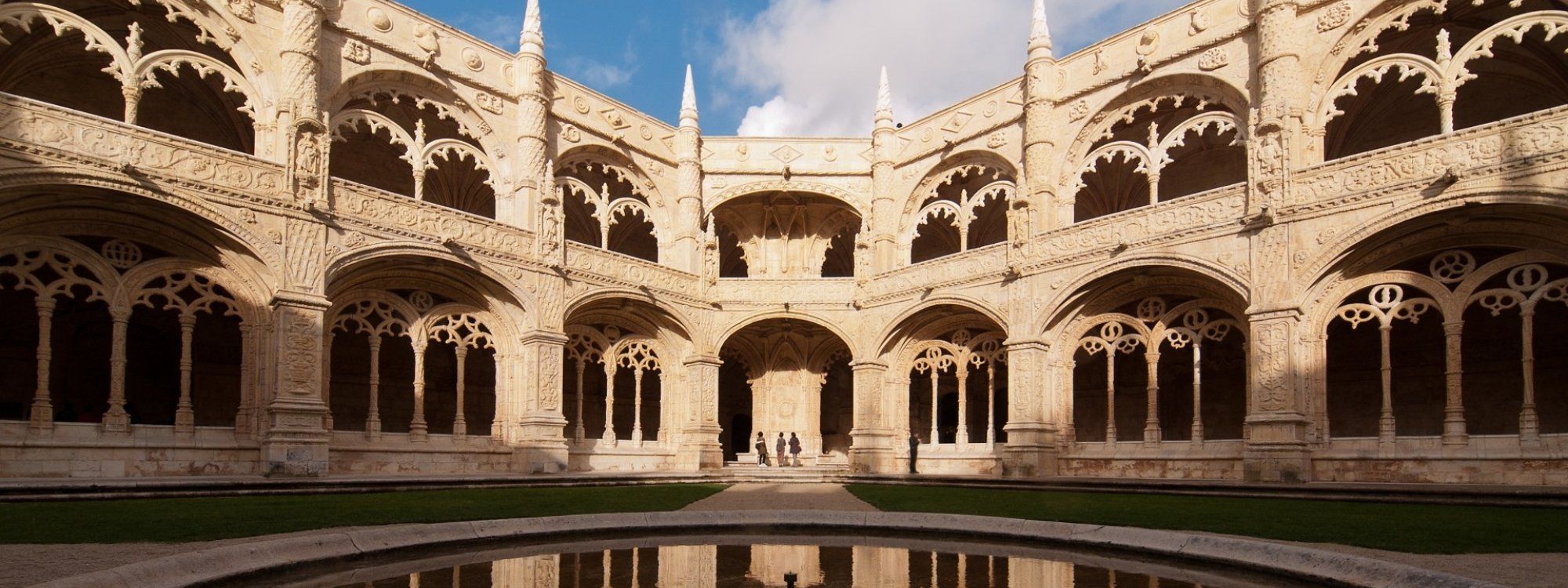
3. Jerónimos Monastery

The masterpiece of the Manueline style, with a carved south portal, a church with slender columns shaped like palm trees and a two-story cloister covered in stone ornament. Together with Belém Tower, it has been a UNESCO World Heritage Site since 1983.
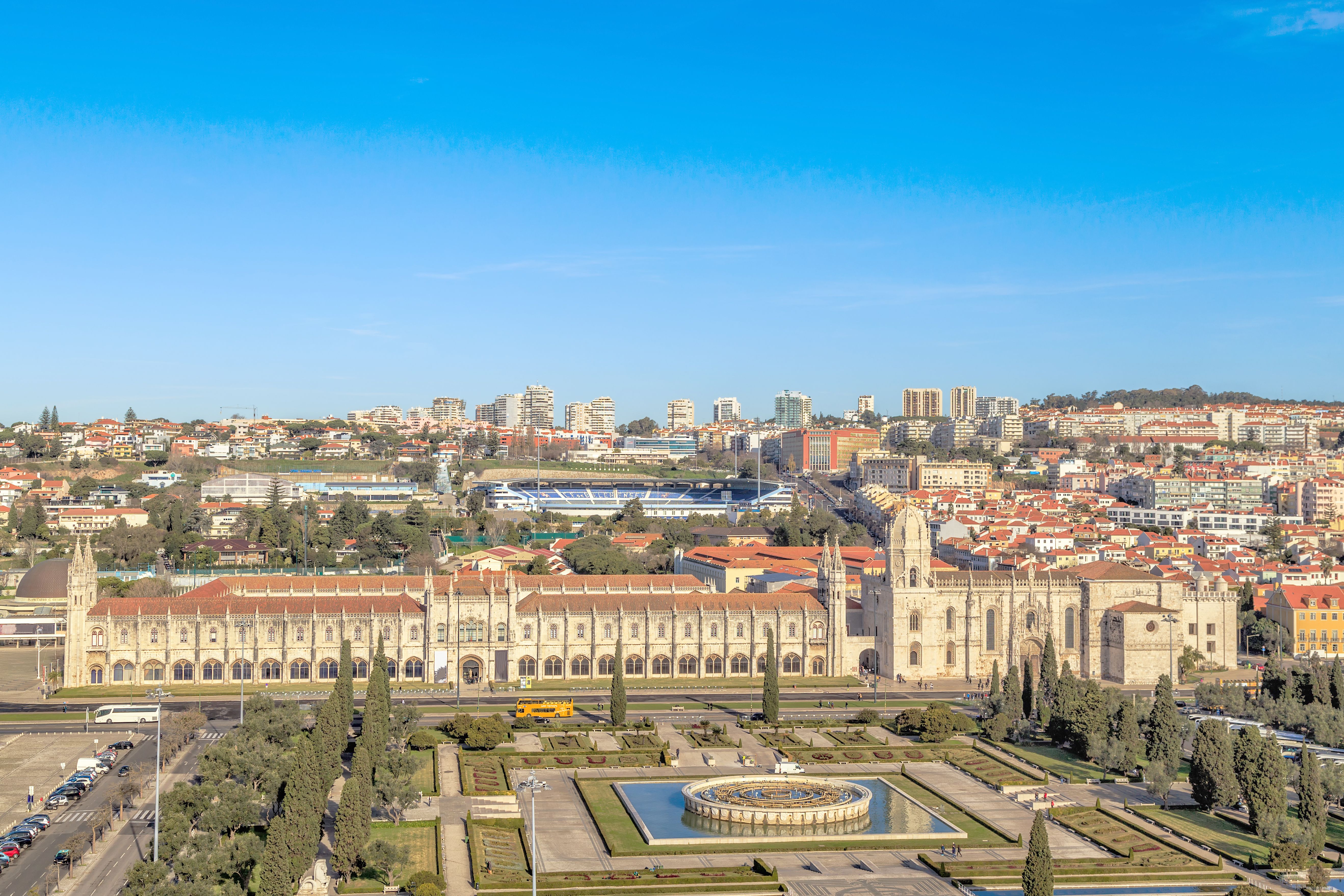
 

Panoramic view of the Jerónimos Monastery in Belém, with its Manueline façade overlooking the formal gardens and fountain of Praça do Império.
Jerónimos Monastery and Praça do Império, Belém, Lisbon, Portugal

4. Belém Tower

Built on the river to guard the entrance to Lisbon's harbor, the tower is decorated with rope carvings, armillary spheres and stone watchtowers. Its small size and narrow stairs make the outside, especially at sunset, the best way to appreciate it.
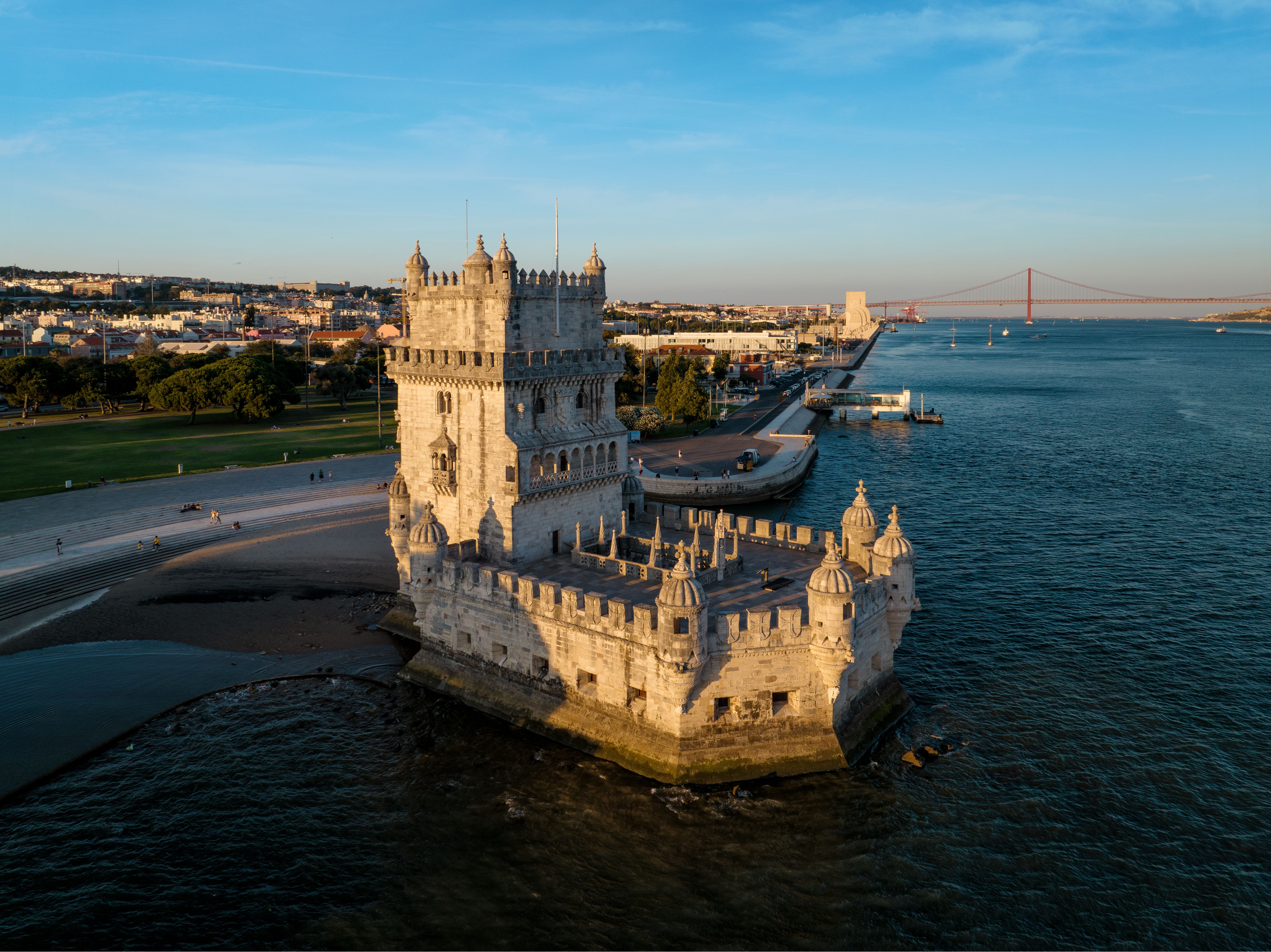
 

Aerial view of Belém Tower beside the Tagus River, with the 25 de Abril Bridge visible in the distance along Lisbon’s waterfront.
Aerial View of Belém Tower and Tagus River, Lisbon, Portugal

5. Portal of Conceição Velha

In the Baixa, the Manueline doorway of the Church of Nossa Senhora da Conceição Velha survived the 1755 earthquake. It is one of the few Manueline pieces left in the downtown area, and easy to miss if you do not look for it.
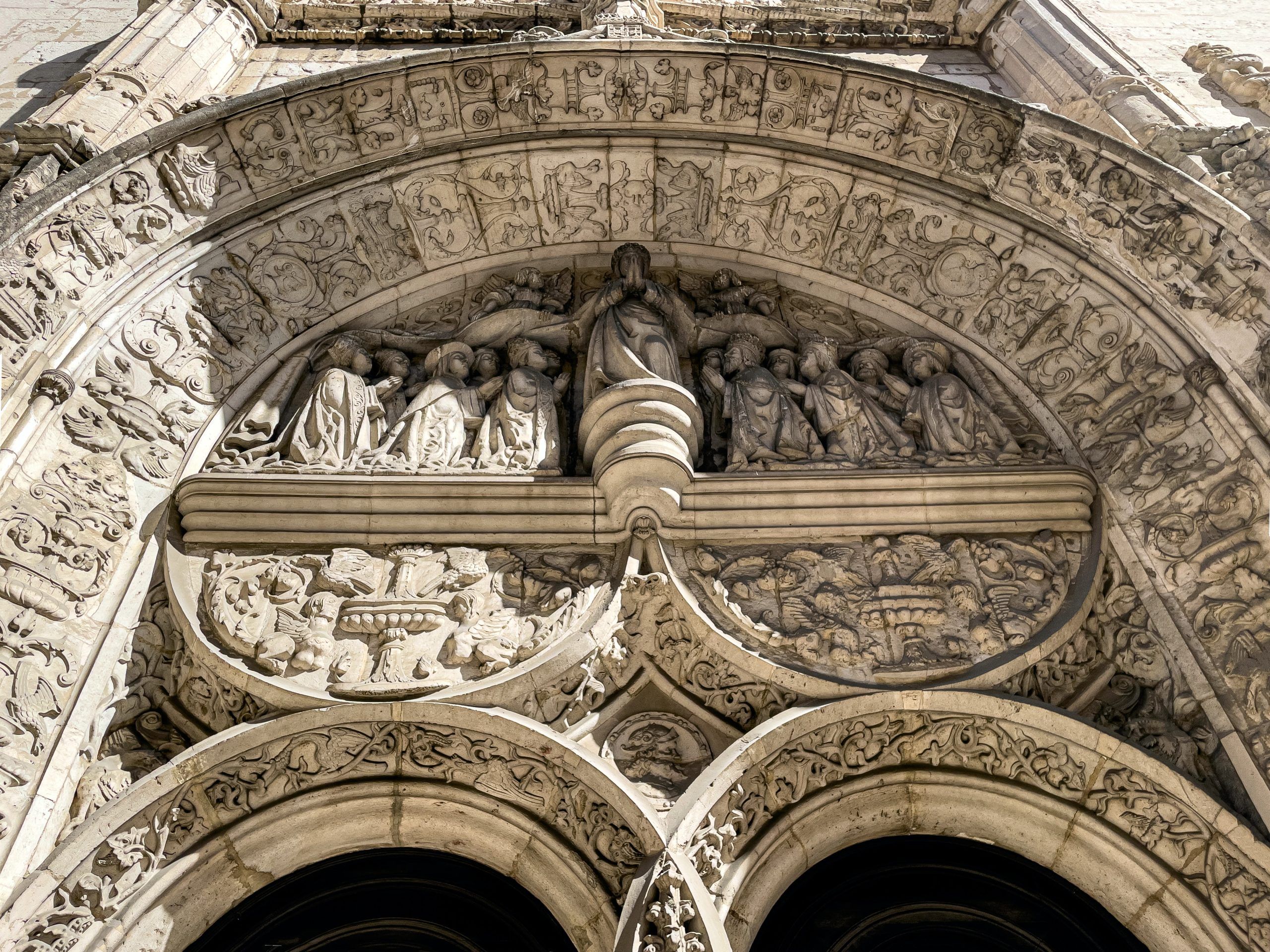
 

Close-up of the ornate Manueline portal of Conceição Velha Church in Lisbon, featuring carved stone arches, religious figures and intricate decorative motifs.
Manueline Portal of Conceição Velha Church, Lisbon, Portugal | Photo by: Patrimonium

🚲 E-BIKE TOUR: FOLLOW THE RIVER TO BELÉM

Ride along the river from the center to Belém, past MAAT and the Monument to the Discoveries, to the Jerónimos Monastery and Belém Tower.

See the tour →

After the 1755 Earthquake: Pombaline Lisbon

The earthquake, tsunami and fires of November 1, 1755 destroyed much of central Lisbon. Under the Marquis of Pombal, the Baixa was cleared and rebuilt on a regular grid of streets, with matching facades and a new building method.

6. The Baixa and its anti-seismic cage

Many Baixa buildings are built around the gaiola pombalina, or Pombaline cage: an internal timber frame with masonry infill. The flexible wood resists the forces of an earthquake, while the masonry protects against fire. It was developed in Portugal after 1755, when the earthquake showed that ordinary masonry could not withstand a major quake.


View across Praça do Comércio featuring the equestrian statue of King José I, with the Arco da Rua Augusta and yellow arcaded buildings in the background.
D. José I Statue and Arco da Rua Augusta, Lisbon, Portugal

7. Praça do Comércio and the Rua Augusta Arch

The great riverside square of the rebuilt city, with yellow arcaded buildings on three sides, opens onto the river on the fourth. Its triumphal arch leads into Rua Augusta, and you can climb to the top for a view over the Pombaline grid.


Upward view beneath the Arco da Rua Augusta in Lisbon, highlighting its stone vault, carved architectural details and bright blue sky above.
Architectural Detail of Arco da Rua Augusta, Lisbon, Portugal
6. The Baixa and its anti-seismic cage Many Baixa buildings are built around the gaiola pombalina, or Pombaline cage: an internal timber frame with masonry infill. The flexible wood resists the forces of an earthquake, while the masonry protects against fire. It was developed in Portugal after 1755, when the earthquake showed that ordinary masonry could not withstand a major quake. 7. Praça do Comércio and the Rua Augusta Arch The great riverside square of the rebuilt city, with yellow arcaded buildings on three sides, opens onto the river on the fourth. Its triumphal arch leads into Rua Augusta, and you can climb to the top for a view over the Pombaline grid.

Baroque and Neoclassical Lisbon

8. Monastery of São Vicente de Fora

On the eastern edge of Alfama, this monastery is known for its tile-lined cloisters and corridors, one of the largest displays of azulejos in the city, and for the views from its roof.


Frontal view of the Monastery of São Vicente de Fora in Lisbon, showing its symmetrical white stone façade, twin bell towers and monumental entrance.
Monastery of São Vicente de Fora, Lisbon, Portugal

9. National Pantheon

Originally the Church of Santa Engrácia, the National Pantheon has a white dome that is one of the landmarks of Lisbon's skyline. Today it holds the tombs of some of Portugal's most important figures, and its terrace looks over the river.


Frontal view of Lisbon’s National Pantheon, featuring its large white dome, symmetrical Baroque façade and monumental entrance beneath a clear blue sky.
National Pantheon in Alfama, Lisbon, Portugal

19th-Century Revival and Iron

10. Rossio Station

Lisbon's most decorative railway station was designed by José Luís Monteiro and opened in 1891. Its Neo-Manueline facade, with two intertwined horseshoe-shaped entrances and a clock turret, revives the style of the Age of Discovery. Trains to Sintra still leave from here, through a tunnel of almost 3 km.


Frontal view of Rossio Railway Station in central Lisbon, highlighting its Neo-Manueline façade, horseshoe-shaped entrances and ornate stone details.
Historic Rossio Railway Station, Lisbon, Portugal

11. Santa Justa Lift

This 45-meter iron lift, designed by Raoul Mesnier du Ponsard and in service since 1902, connects the Baixa with Largo do Carmo. Its decorated ironwork and lookout at the top make it both a piece of engineering and a viewpoint.
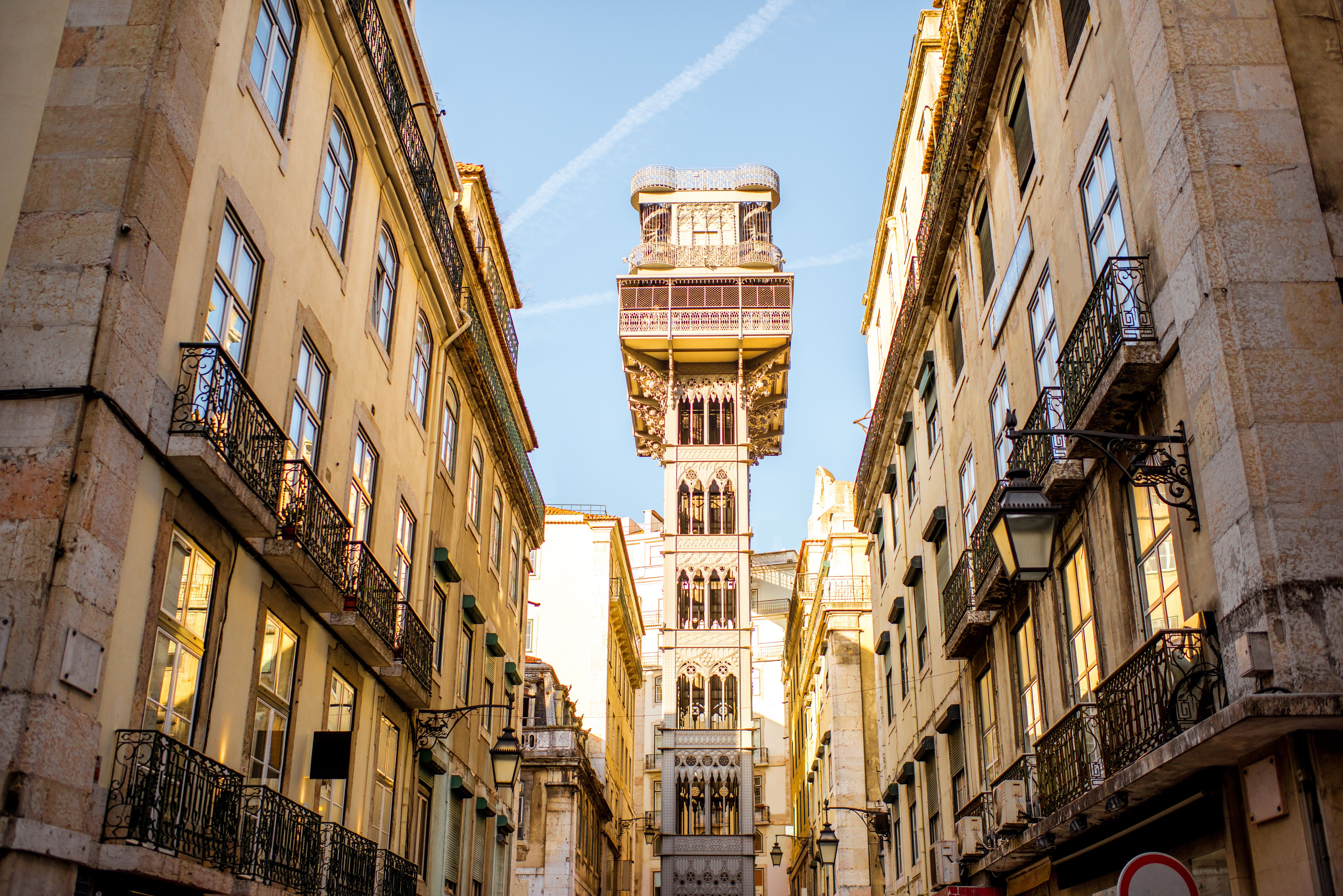
 

Street view of the Santa Justa Lift rising between historic buildings in Lisbon’s Baixa district, highlighting its ornate iron structure and observation platform.
Santa Justa Lift in Baixa, Lisbon, Portugal

20th-Century Engineering

12. 25 de Abril Bridge

Opened in 1966 as the Salazar Bridge and renamed after the 1974 revolution, this suspension bridge has a main span of about 1 km. It is painted the same International Orange as San Francisco's Golden Gate, and since 1999 a lower deck has carried trains across the river. See it from Belém, the LX Factory area or the Cristo Rei on the south bank.


Wide view of the 25 de Abril Bridge spanning the Tagus River between Lisbon and Almada, with the south bank visible beyond the suspension structure.
25 de Abril Bridge Across the Tagus River, Lisbon, Portugal

Expo '98 and Contemporary Lisbon

For the Expo '98 world's fair, Lisbon transformed a former industrial riverside in the east of the city into Parque das Nações, with some of its most striking modern buildings.

13. Oriente Station and the Vasco da Gama Bridge

Designed by Santiago Calatrava and opened in May 1998, Oriente station is known for its lattice of glass and steel above the platforms, which many visitors compare to a forest of trees. Nearby, the Vasco da Gama Bridge, opened in March 1998, is the longest bridge in the European Union.


Exterior view of Lisbon’s Oriente Station, showing Santiago Calatrava’s distinctive glass-and-steel canopy and modern transportation complex.
Oriente Station in Parque das Nações, Lisbon, Portugal

14. Portugal Pavilion

Álvaro Siza's pavilion for Expo '98 covers a large ceremonial square with a thin, curved concrete canopy, inspired by the idea of a sheet of paper resting on two bricks. It now belongs to the University of Lisbon.
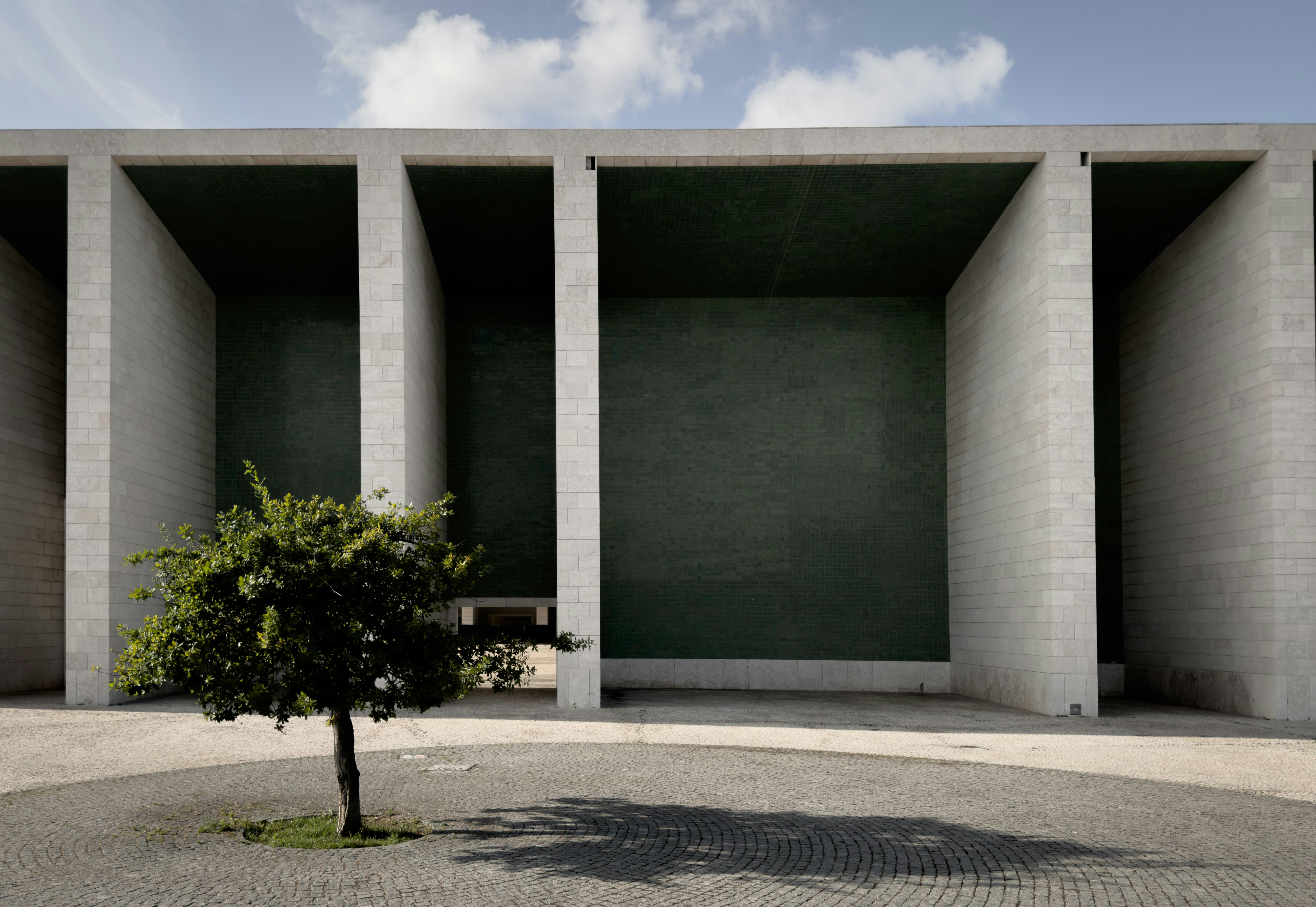
 

Exterior view of the Portugal Pavilion in Parque das Nações, Lisbon, showing its monumental stone walls, geometric openings and minimalist contemporary architecture.
Portugal Pavilion in Parque das Nações, Lisbon, Portugal

15. Champalimaud Centre and MAAT

Along the river near Belém, two buildings show Lisbon's 21st-century architecture. The Champalimaud Centre for the Unknown, by the Indian architect Charles Correa, opened in 2010 where the Tagus meets the Atlantic. The MAAT, the Museum of Art, Architecture and Technology, by Amanda Levete, opened in 2016 next to the old Tejo Power Station, a landmark of industrial architecture that is now part of the museum.


 

Waterfront view of MAAT in Lisbon, showing its curved contemporary façade beside the Tagus River and the riverside promenade stretching alongside the building.
MAAT – Museum of Art, Architecture and Technology, Lisbon, Portugal

🚌 HOP-ON HOP-OFF: BELÉM & MODERN LISBON

A hop-on hop-off bus ticket covering Belém and modern Lisbon, an easy way to see buildings from the Manueline monuments to Parque das Nações.

See the ticket →

How to See Lisbon's Architecture

DayRouteBuildings
Day 1Alfama, Baixa and Chiado on footSé, São Vicente de Fora, Pantheon, Conceição Velha, Praça do Comércio, Santa Justa, Carmo, Rossio station
Day 2Along the river to Belém25 de Abril Bridge, MAAT, Jerónimos, Belém Tower, Champalimaud
Half dayMetro to OrienteOriente station, Portugal Pavilion, views of the Vasco da Gama Bridge

🏙️ LISBON: ESSENTIAL TRAVEL PACKAGE WITH FADO

Flights and a hotel in Lisbon with a fado evening, with time to explore the city's architecture at your own pace.

See the package →

Plan it your way

Custom Your Trip

Tell our local travel advisors which towns, dates and experiences you want and we build the Lisbon trip around you, tours included.

Start your custom trip →

Limited time

Portugal Packages On Sale

Flights, hotels and rental car bundled at reduced prices. See every package currently on sale and book while it lasts.

Book now →