Algarve History & Culture: From Romans to Today
A short history of the Algarve, from Romans and Moors to the Age of Discovery and tourism, plus its architecture, crafts, festivals and where to see them.
January 20, 2023 • 6 min read
Algarve History & Culture: From Romans to Today
The Algarve takes its name from al-Gharb, "the west" in Arabic, from the five centuries when it was part of Moorish al-Andalus. Before that, the Romans produced olive oil and fish sauce here. Portugal conquered the region in 1249, and in the 15th century Lagos and the coast near Sagres became bases for the voyages of the Age of Discovery. The 1755 earthquake destroyed much of the coast, and since the 1960s tourism has shaped the region. You can still see this history in castles, Roman villas, whitewashed towns, decorated chimneys and tiled churches.
Below is a short timeline of the Algarve's history, the culture you will notice when you visit and the best places to see both.
Algarve History at a Glance
| Period | What happened | Where to see it |
|---|---|---|
| Prehistory | Megalithic stones raised in the west | Menhirs around Vila do Bispo |
| c. 200 BC to 5th century | Roman rule; olive oil and fish sauce production | Milreu (Estoi), Cerro da Vila (Vilamoura) |
| 8th to 13th century | Moorish rule as part of al-Andalus; Silves is the main city | Silves Castle, old town layouts, place names |
| 1242 to 1249 | Christian reconquest; Faro falls in 1249 | Tavira Castle, Santa Maria do Castelo |
| 15th century | Age of Discovery led from Lagos and Sagres | Lagos old town, Fortaleza de Sagres |
| 1755 | Earthquake and tsunami destroy much of the coast | Rebuilt town centres across the Algarve |
| 1960s onwards | Faro Airport opens in 1965 and tourism grows | Today's resorts and marinas |
A Short History of the Algarve
Romans
After the Romans took control of the region in the 2nd century BC, the Algarve prospered on olive oil and garum, a fermented fish sauce exported across the empire. The ruins of the villa at Milreu, near Estoi, and the site of Cerro da Vila in Vilamoura have mosaics, baths and the remains of fish-salting tanks. Faro was the Roman town of Ossonoba.
The Moors and al-Gharb
The Moors arrived in the early 8th century, and the region became the western part of al-Andalus, known as al-Gharb. Silves was its most important city, a prosperous stronghold whose red sandstone castle still stands above the town. The Moorish period left its mark in the irrigation of the orchards, the almond, fig and citrus groves, the layout of the old towns and place names that begin with Al-, such as Albufeira, Algoz and Alvor.
The Christian reconquest
Portuguese forces, led by Paio Peres Correia and the Order of Santiago, took Silves and Tavira in 1242. Faro fell in March 1249, completing the conquest, and King Afonso III became the first Portuguese monarch to call himself King of Portugal and the Algarve. Portuguese kings kept the title until the monarchy ended in 1910.
SILVES AND MONCHIQUE TOUR
A full-day guided tour to the castle town of Silves, the former Moorish capital, and the Serra de Monchique, with the views from Fóia.
See the tour →The Age of Discovery
In the 15th century Prince Henry the Navigator based himself near Lagos and sponsored voyages down the coast of Africa. In 1434 Gil Eanes, sailing from Lagos, became the first navigator to pass Cape Bojador, a turning point in the exploration of the Atlantic. Lagos grew rich from this trade, which included the beginnings of the Atlantic slave trade, and later served as the capital of the Algarve until 1755.
The 1755 earthquake
The great earthquake of 1 November 1755 and the tsunami that followed destroyed coastal towns and fortresses across the Algarve. Lagos lost its role as capital, and Faro, protected by the sandbanks of the Ria Formosa, suffered less and became the region's administrative centre. Many of the churches and town centres you see today were rebuilt after the disaster.
Fishing, canning and tourism
In the 19th and early 20th centuries, tuna fishing and sardine canning drove the economy of towns such as Portimão, Olhão and Vila Real de Santo António, where the first canning factory in Portugal opened in 1853. From the 1960s air travel changed the region. Faro Airport opened in 1965, and the fishing villages of the coast grew into the resorts of today.
Algarve Culture: What You Will Notice
Architecture
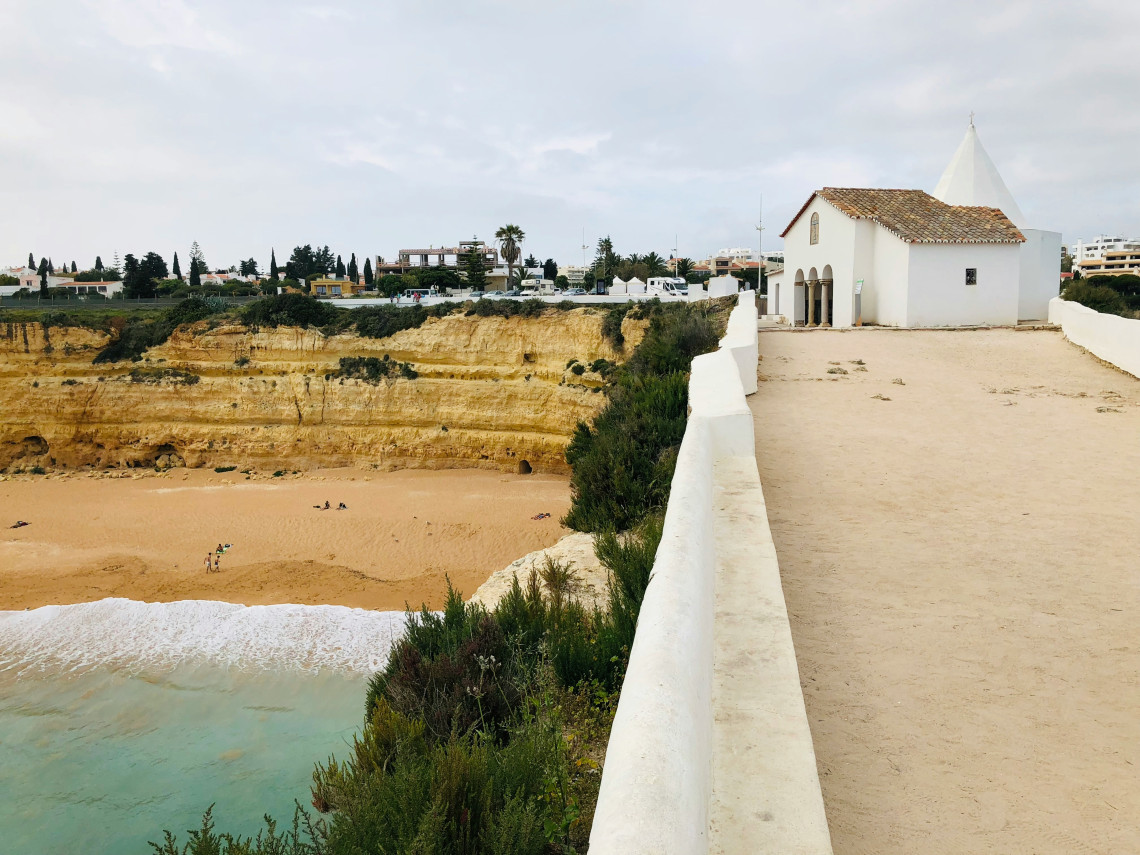
- Chimneys: the Algarve is known for its decorated chimneys, many of them lace-like and white, which make every village roofline different.
- Platibandas: coloured or patterned strips painted along the top edge of house façades.
- Açoteias: flat roof terraces, inherited from the Moorish period, used to dry fruit and collect rainwater. The cube-shaped houses of Olhão are the best example.
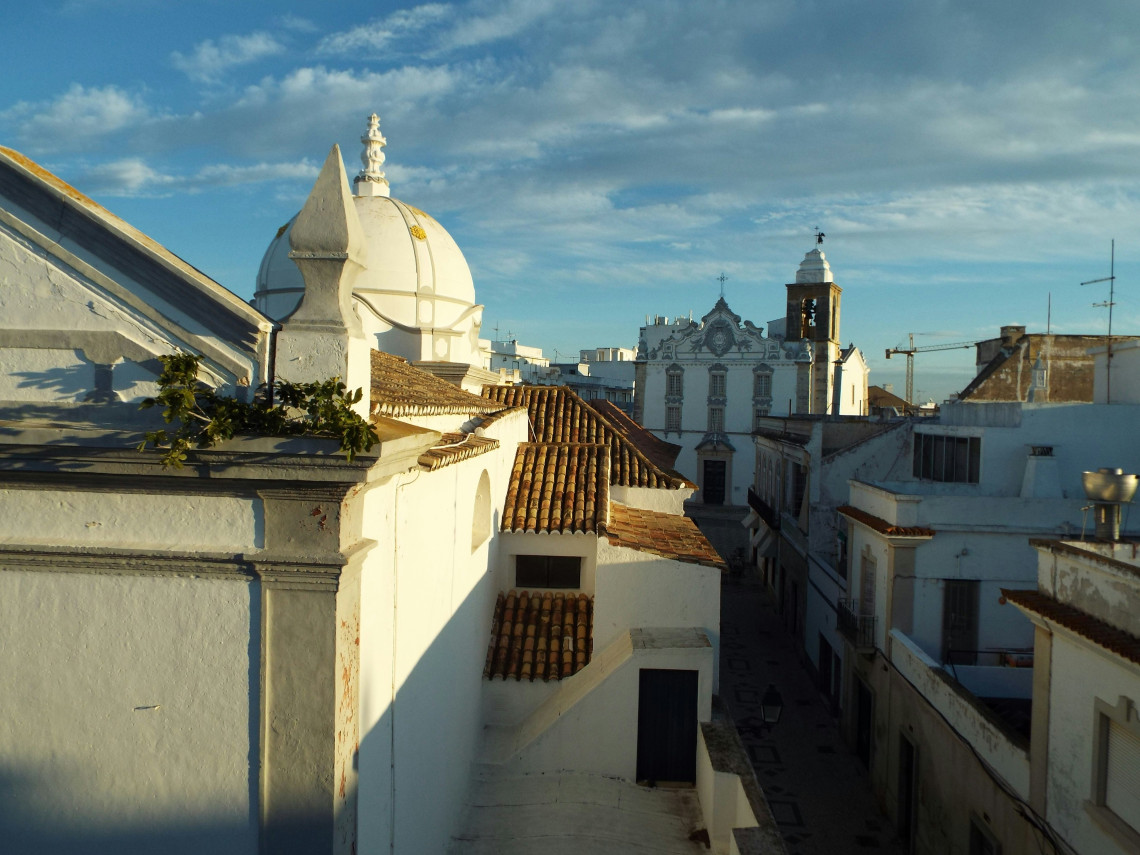
- Azulejos: painted tiles cover church interiors and façades. The church of São Lourenço in Almancil is one of the best-known examples in the Algarve.
Crafts
Traditional crafts include empreita, fine braiding of dwarf palm leaves into baskets and hats, hand-painted pottery from Porches and the area around Loulé, copper work for cataplanas, and cork products from the cork oaks of the hills. Loulé's market and craft shops are good places to see them.
Music and dance
The corridinho is the Algarve's traditional folk dance, a fast couple dance accompanied by the accordion. You will see it at local festivals and folk group performances, especially in summer.
Festivals
- Carnival in Loulé: the largest Carnival in the Algarve, with parades in February or March.
- Silves Medieval Fair: held each August, when the old town returns to the Middle Ages with costumes, markets and shows below the castle.
- Summer saints' festivals: in June, towns celebrate the popular saints with grilled sardines, music and dancing.
- Village festivals: most villages hold an annual festa with a procession, food and music, usually in summer.
Food is culture too
Where to See the Algarve's History
| Place | What to see |
|---|---|
| Silves | Moorish castle, cathedral, Medieval Fair in August |
| Lagos | Old town walls, Church of Santo António, Forte da Ponta da Bandeira, slave market site |
| Sagres and Cape St Vincent | Fortaleza de Sagres and the cape linked to the Age of Discovery |
| Faro | Walled Old Town, cathedral, Municipal Museum with Roman mosaics |
| Tavira | Castle, Santa Maria do Castelo, 12th-century bridge and many churches |
| Estoi and Milreu | Roman villa ruins and the 19th-century Palácio de Estoi |
| Loulé | Castle walls, market hall, crafts |
| Olhão | Cube-shaped houses with roof terraces, fishing heritage |
HISTORICAL ALGARVE FULL-DAY TOUR
A full-day guided tour from Albufeira to Silves, Fóia, Cape St Vincent, Lagos and Ponta da Piedade.
See the tour →ALGARVE ESSENTIAL PACKAGE
Flights, hotel and airport transfers in the Algarve, with time to explore its castles, old towns and museums.
See the Algarve package →Plan it your way
Custom Your Trip
Tell our local travel advisors which towns, dates and experiences you want and we build the Algarve trip around you, history and culture tours included.
Start your custom trip →Limited time
Portugal Packages On Sale
Flights, hotels and rental car bundled at reduced prices. See every package currently on sale and book while it lasts.
Book now →